Customisable leverage

Dial your leverage up or down.


Customisable leverage

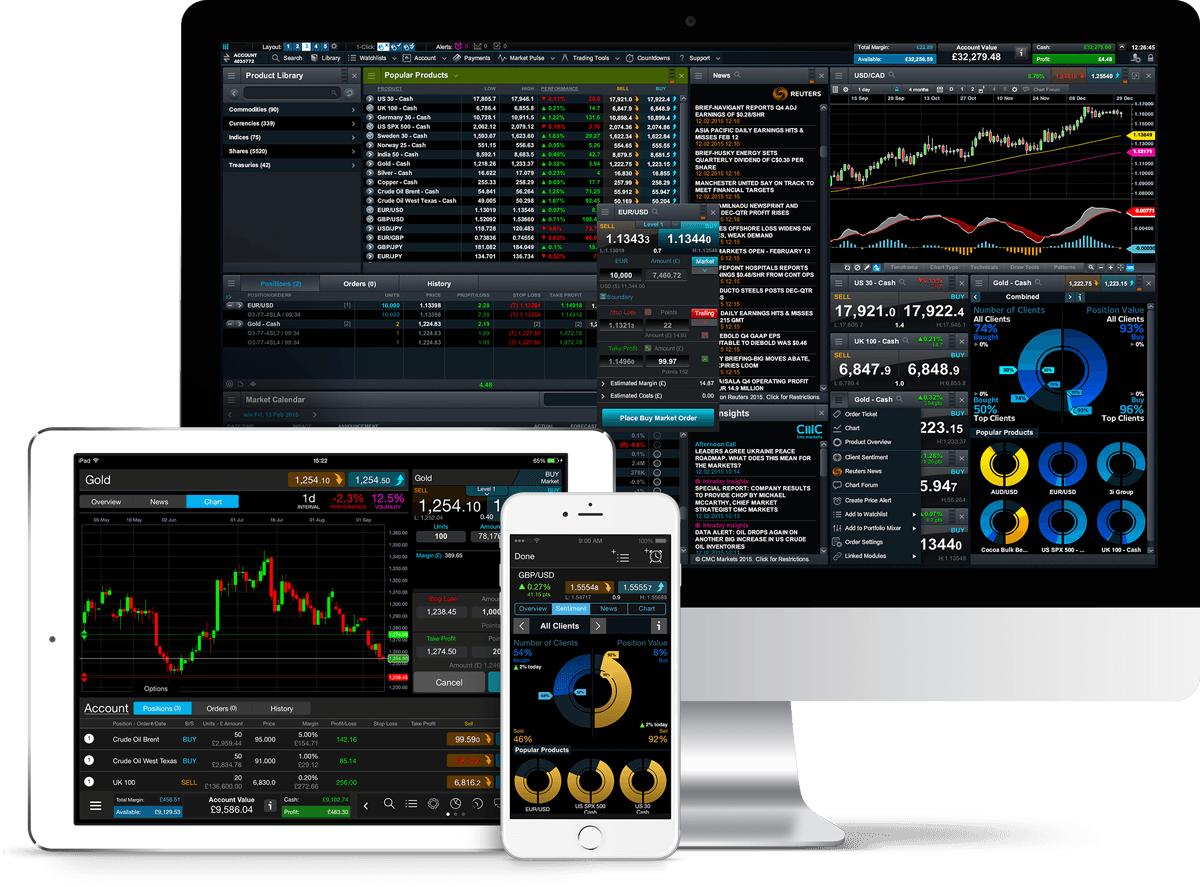
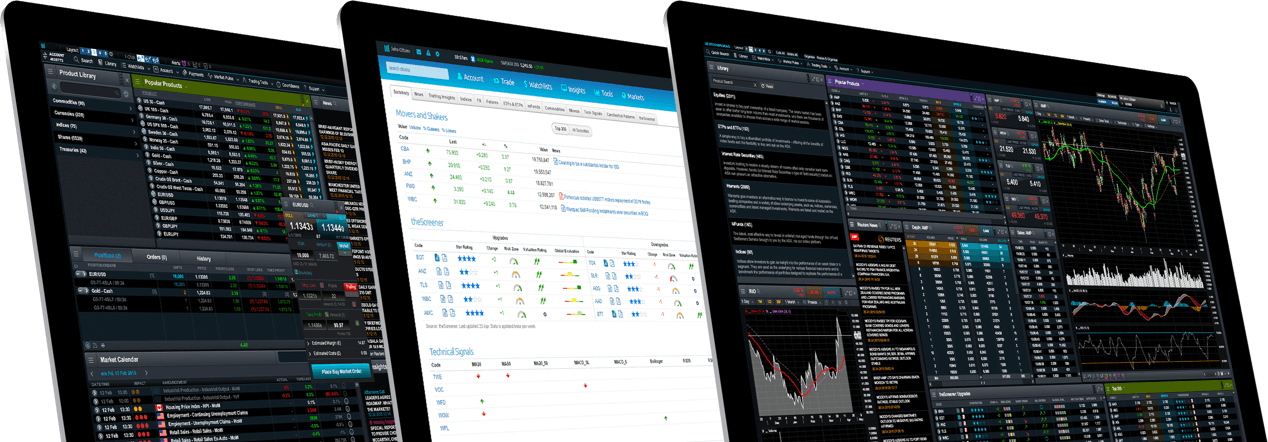
Leverage is a powerful tool that allows you to invest without tying up large percentages of your own capital. The CMC Tracker platform offers a flexible approach to leverage when you trade CFDs. Gone are the days of being forced to take on a fixed margin rate. Now you can choose how much you want to leverage each position. You can easily dial up or down the amount of leverage for each transaction, and the amount you’d like to ‘borrow’ from CMC Markets.

Pay for the whole position yourself, or ‘borrow’ most of the funds to open the position from us. The decision is yours. On our CFD trading platform you can increase or reduce your leverage to provide whatever level of exposure you feel most comfortable with. On the CMC Tracker platform, this is called customisable financing. Remember that leverage can enhance profits as well as losses.

Overnight financing costs

Customisable leverage can save you money, as you only pay interest on the leveraged portion of your initial trade, whether the price goes up or down. For longer term investments, you might prefer less leverage and to use more of your own money to reduce overnight holding costs. You can even choose to outlay the entire amount of the position (100% margin) and reduce your financing cost to zero. Trade using no leverage or significant leverage: the decision is yours.

Overnight financing fees apply only to the ‘borrowed’ amount and are charged daily. If you pay for the whole position, there are no overnight costs to pay.

When it comes to costs, we provide complete transparency, with holding costs charged daily and visible within the account history just after 17:00 New York time. You can view these costs in the Account menu under ‘History’. Click the icon next to ‘Trade Finance’ to view a full breakdown of costs. See image below.

Overnight financing costs


Example of a CFD trade

You can trade whether the market is going up or down. With CFD trading, your profit or loss is determined by the difference between the buy price and the sell price of the financial instrument you’re trading, which means you can trade either long or short depending on which direction you think the market is headed.

Going long – buying in a rising market

If you buy a CFD you think will rise in value and you’re right, you can sell it for a profit. If the value goes down instead, you will make a loss.

Going short – selling in a falling market

If you sell a CFD you think will fall in value and you’re right, you can buy it back at a lower price, for a profit. If the value goes up instead, you make a loss.

Default leverage and customisable leverage

Most CFD providers only offer CFDs with a single level of leverage. The CMC Tracker platform offers a particular level of leverage as a default, then allows you to dial your leverage up or down to the level where you feel most comfortable trading.

Buy example

Example 1 – Default leverage

Buy 10 Australia 200 CFDs at a price of 4,500.The default margin level is at 1% (99% financing). This means you only have to put forward 1% of the total size of the position as initial margin.

Total Exposure = Price x Number of units
Total Exposure = 4,500 x 10
Total Exposure = $45,000

Initial Margin = Total Exposure x Margin
Initial Margin = $45,000 x 1%
Initial Margin =$450

Therefore, for a $450 deposit you will control a $45,000 position. Your profit or loss will be relative to the total position size and is not limited to the $450 initial margin.

You have effectively borrowed $44,550 to transact this trade.

Buy example

Example 2 – Customisable leverage

You decide to lower your risk by borrowing less to transact this trade. Again, you decide to buy 10 Australia 200 CFDs at 4,500. However, this time you dial the margin up to 20% by dialling down the financing level to 80%. This means that you will put forward 20% of the total size of the position as initial margin.

Total exposure = Price x Number of units
Total exposure = 4,500 x 10
Total exposure = $45,000

Initial margin = Total exposure x Margin
Initial margin = $45,000 x 20%
Initial margin = $9,000

Therefore, for a $9,000 deposit you will still control a $45,000 position. Your profit or loss will be relative to the total position size and is not limited to the $9,000 initial margin.

You have now effectively borrowed only $36,000 to transact this trade.

Sell example

Example 1 – Default leverage

You sell 10,000 Telstra CFDs, at $3.00. The default margin level is at 5% (95% financing), meaning you only have to put forward 5% of the total size of the position as initial margin.

Total exposure = Price x Number of units
Total exposure = $3.00 x 10,000
Total exposure = $30,000

Initial margin = Total exposure x Margin
Initial margin = $30,000 x 5%
Initial margin = $1,500

Therefore, for a $1,500 deposit you will control a $30,000 position. Your profit or loss will be relative to the total position size and is not limited to the $1,500 initial margin.

You have effectively borrowed $28,500 to transact this trade.

Sell example

Example 2 – Customisable leverage

You decide to lower your risk by borrowing less to transact this trade. Again you decide to Sell 10,000 Telstra CFDs, at $10.00, but this time you dial up the margin level to 50% by dialling down the financing level to 50%. This means that you will put forward 50% of the total size of the position as initial margin.

Total exposure = Price x Number of units
Total exposure = 3.00 x 10,000
Total exposure = $30,000

Initial margin = Total exposure x Margin
Initial margin = $30,000 x 50%
Initial margin = $15,000

Therefore, for a $15,000 deposit you will control a $30,000 position. Your profit or loss will be relative to the total position size and is not limited to the $15,000 initial margin.

You have effectively borrowed $15,000 to transact this trade.